.png)


Why a GFCI Trips in the First Place
A GFCI is constantly comparing the electricity flowing out on the hot wire to the electricity returning on the neutral wire. When those two numbers don't match, it means current is escaping somewhere it shouldn't be — an unsafe path — and the outlet cuts power to protect the person using the equipment.
GFCIs are built to the UL 943 standard, which sets a trip threshold between 4–6 milliamperes (mA) for Class A devices. That part is fairly well known. What's less talked about is how fast the outlet is supposed to trip once it detects that imbalance.
The Part Most People Don't Know: The Time Curve
UL 943 actually calls for a time-delay curve, not a single fixed speed. At low leakage levels (around 6 mA), the standard allows a longer delay — up to a few seconds — so the outlet doesn't trip on harmless, momentary fluctuations. At much higher leakage levels (300+ mA, the kind that could genuinely hurt someone), the outlet is required to trip almost instantly, in under 0.02 seconds.
In short: the more current that's leaking, the faster the outlet should react. The less current leaking, the more time it's allowed to take.
Where the Problem Comes From
Building an outlet that follows that full time curve accurately costs more to manufacture. So many GFCIs on the market are simply engineered to trip fast, period — regardless of how much current is actually leaking. That works fine for most household devices. But a patty forming machine, like many motor-driven equipment, produces a small, brief current leakage the moment it starts up. If the GFCI isn't built to the proper time curve, it reads that normal startup leakage as a fault and trips immediately, even though nothing is actually wrong.
This isn't a reflection of the outlet being "bad" in a general sense; it's a reflection of how it was engineered relative to the standard. And it's an extremely common situation. We see it across the board, from small independent processors to large national grocery accounts, because it's common to select GFCIs based on what's readily available or fits the budget, without knowing this distinction exists.
What We Tested and Recommend
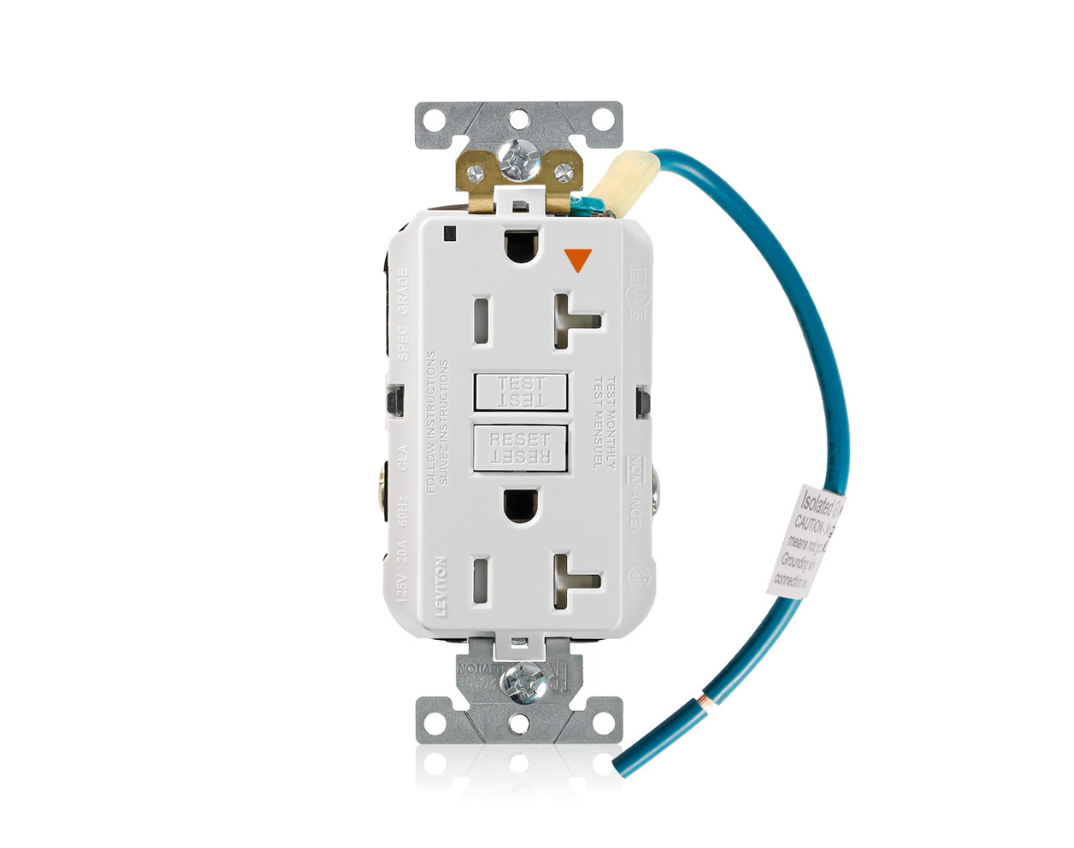
We ran tests across a few different GFCI models and found one that performs reliably with our equipment: the Leviton GFTR2-IGW, 20A-125V SmartlockPro receptacle. We sourced ours through a local electrical supply company for approximately $35.
If your team typically works with a different manufacturer, such as Hubbell, you may find a comparable model that performs the same way. As a general guideline, GFCIs in that price range tend to be engineered closer to the full UL 943 time curve, which means they can handle the brief startup leakage from our machines (or similar equipment) without nuisance tripping.
The Takeaway
If your patty former trips a GFCI outlet on startup, it doesn't mean the machine is faulty. It usually means the outlet is prioritizing fast-trip speed over the full UL 943 time-delay curve. Swapping to a properly engineered GFCI, like the Leviton model above, typically resolves the issue without any changes needed to the machine itself.
Still having trouble after switching outlets? Reach out to your local ABM dealer, or contact us if you're not sure who that is, and we'll help point you in the right direction.
.jpg)

.jpg)
.jpg)


.svg)
.svg)