Consistency Starts With Portion Control
Protein is one of the most expensive items in any food operation. When fillet thickness varies, you’re likely to see:
- Uneven product weights
- Inconsistent portion sizes
- More giveaway
- Higher food costs
- Customer complaints
Consistent thickness helps you hold tighter product specs and cut down on variation from piece to piece. Across thousands of pounds of product, small inconsistencies add up to a big cost.
Better Cooking Performance
Uneven cooking is one of the most common complaints in foodservice and retail kitchens. When one end of a chicken breast is much thicker than the other, cooks face a tough choice: overcook part of it, undercook part of it, or spend more time on prep.
Uniform fillets cook more predictably. That means:
- Better texture
- More consistent internal temperatures
- Improved food safety
- A better experience for the customer
For restaurants and prepared-food programs, consistency shows up on every plate.
A More Professional Product
Shoppers notice uniformity. A case full of fillets that look different from one another can give the impression of an inconsistent product. Consistent thickness gives you:
- Better merchandising
- Cleaner-looking packages
- A more uniform product
- A stronger brand image
In competitive protein categories, appearance matters.
Reduce Labor and Rework
Without dedicated equipment, consistent fillets depend entirely on the skill of whoever’s holding the knife. That often leads to:
- Variation from one employee to the next
- More training time
- Extra trimming
- Product rework
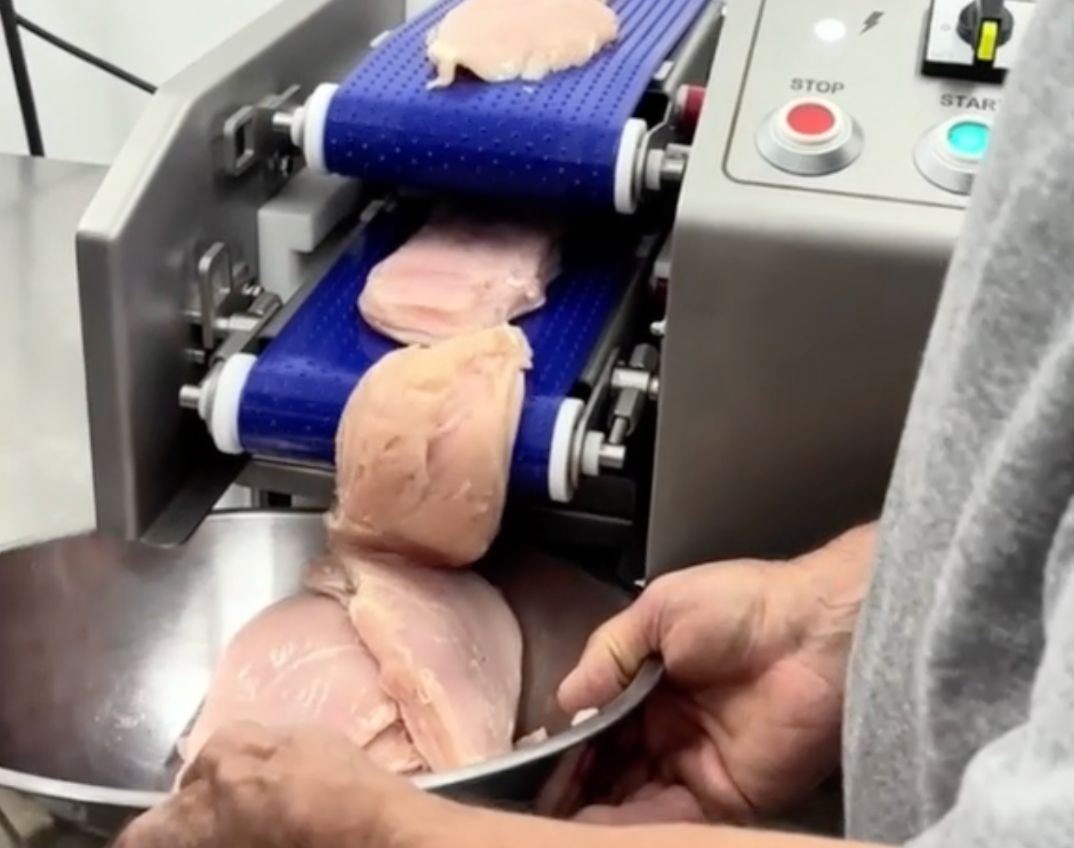
Automated filleting delivers repeatable results all shift long, without relying only on hand-cutting skills. That means less labor and better output at the same time.
Support Value-Added Product Programs
Many of today’s fastest-growing protein categories are value-added products, such as:
- Marinated chicken breasts
- Stuffed chicken
- Breaded fillets
- Prepared meal components
- Ready-to-cook protein
These products often need a consistent thickness so they season, cook, package, and present properly. The more consistent your starting product, the easier every step after it becomes.
Improve Yield Through Precision
Every unnecessary bit of trim loss cuts into profit. Equipment that produces more uniform fillets helps limit excess trimming and get more usable product out of every case. For processors, grocery meat departments, and foodservice operations, even a small improvement in yield adds up to real savings over time.
Consistency Made Simple With the ABM TP30
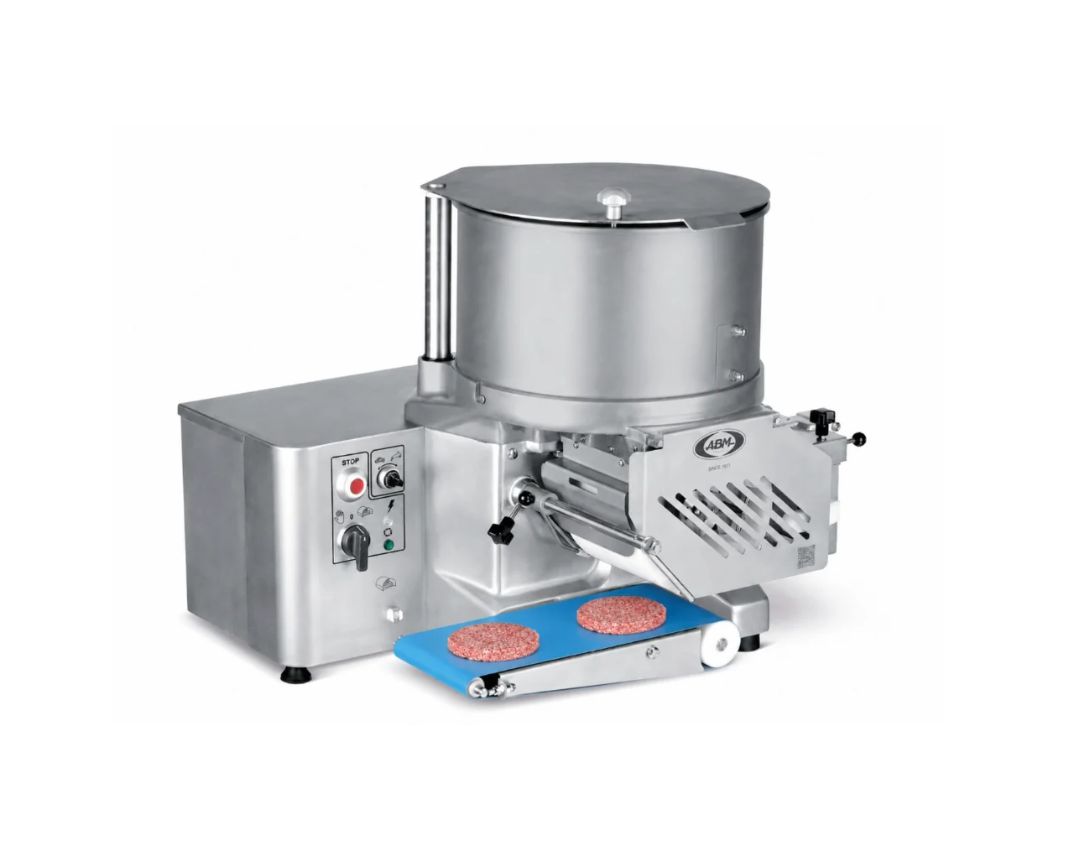
The ABM TP30 tabletop meat fillet machine was built to deliver even, repeatable fillets without putting your team’s hands near the blade. It produces up to seven pieces per minute and handles chicken, turkey, pork, and beef. It’s compact enough for smaller meat rooms, made entirely of stainless steel, and comes apart for cleaning without tools. Like every ABM machine, it’s made in Italy.
The Bottom Line
When you evaluate filleting equipment, it’s easy to focus on throughput numbers alone. But speed is only part of the picture.
Consistent fillet thickness improves cooking performance, portion control, product appearance, labor efficiency, and overall profitability. For processors who want to improve both efficiency and quality, consistency isn’t just a nice feature. It’s a competitive advantage.