.png)


Comfort First: Learning the Machine Without Feeling Overwhelmed
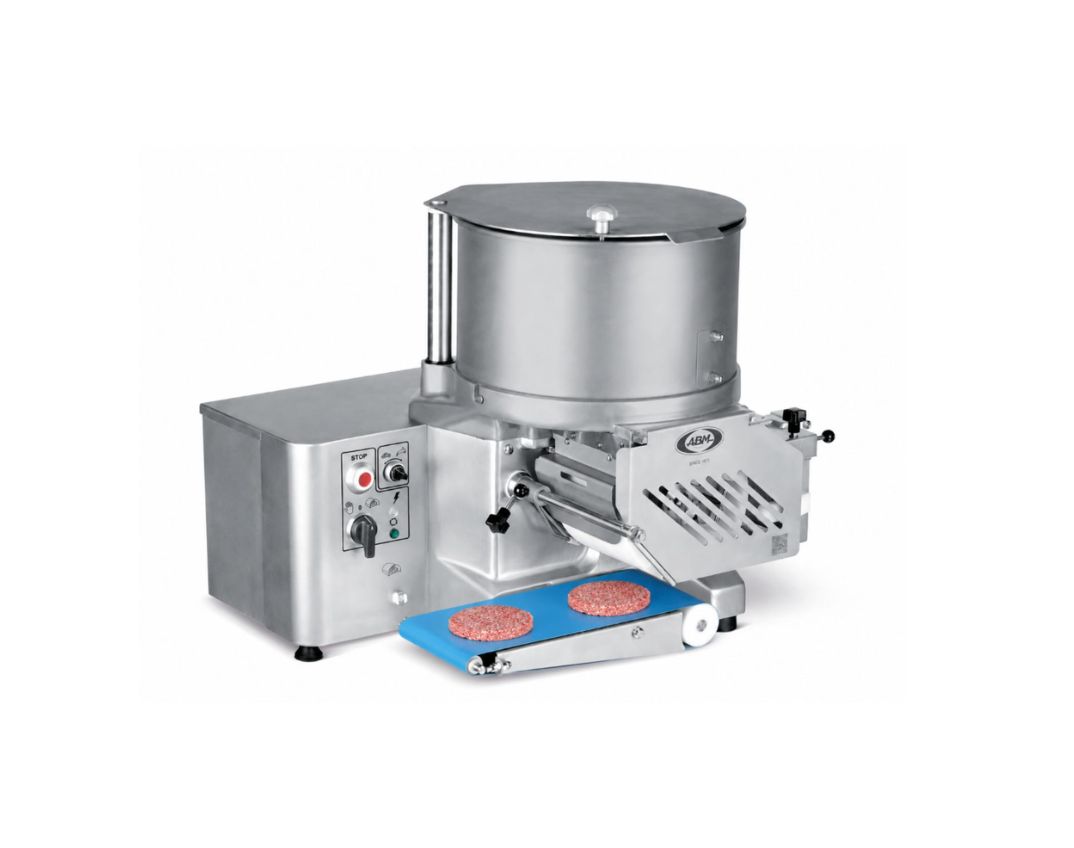
Every new operator needs time to find their rhythm. With variable speed, the F2000PLUSB can be set to a slower pace while someone is still learning how to offload patties and manage the wire cleaner. Instead of being handed a patty every second right out of the gate, new operators can ease in, build confidence, and get comfortable with the process. That's a small thing that makes a big difference — a team that feels in control is a team that works safely and consistently.
Scaling Up: Production Speed When You're Ready
Once your team has the process down, the F2000PLUSB can turn up to meet demand — up to one patty per second, or roughly 3,600 patties an hour. That's the kind of output that keeps a busy grocery, food service, or processing operation moving without sacrificing consistency along the way. Variable speed means you're not locked into one pace for the life of the machine. As your operators get faster and more confident, the equipment keeps up.
Quality Control: Getting the Fill Right on Larger Patties
Here's where variable speed really earns its keep. Drum-style patty formers are precision tools — the drum and paddles are synchronized to fill the void, not compress the product into it. For a standard patty, that happens quickly. But for larger, thicker patties — say, a 5" (127mm) burger at 8 oz (roughly 18mm thick) — running at full speed can outpace a proper fill.
Slowing the F2000PLUSB down for these larger sizes gives the drum time to fill completely and evenly, without compressing the meat into a shape that looks fine on display but turns out tough and dry on the plate. It's a small adjustment that protects the one thing that matters most to your customers: how the product actually tastes and holds together when it's cooked.
The Bottom Line
Variable speed isn't a bonus feature — it's what lets the F2000PLUSB adapt to your operators, your volume, and your product specs, all on one machine. Whether you're training a new team member, hitting a production deadline, or forming a larger specialty patty, the F2000PLUSB gives you the control to get it right.
That kind of flexibility is built on the same principle behind every ABM machine: equipment that works the way real operations do, backed by parts and support you can count on when you need them.
Have questions about whether the F2000PLUSB is the right patty former for your operation? Contact ABM or reach out to your local authorized dealer to learn more.
.jpg)

.jpg)
.png)
.svg)
.svg)