.png)


The Real Cost of Hand-Filleting
Ask any procurement manager or operations lead what keeps them up at night, and it's rarely a single dramatic failure. It's the slow bleed of small, everyday problems that add up. When it comes to filleting chicken breast, that bleed shows up in three places.
1. Inconsistency
Hand-filleted chicken breast varies by the person doing the cutting, and sometimes by the hour of their shift. Thinner cuts here, thicker ones there, uneven portions across a batch. That inconsistency isn't just a cosmetic issue. It affects cook times, portion costs, and the customer's experience with the final product. When every fillet comes off the line looking different, it's hard to guarantee quality at scale.
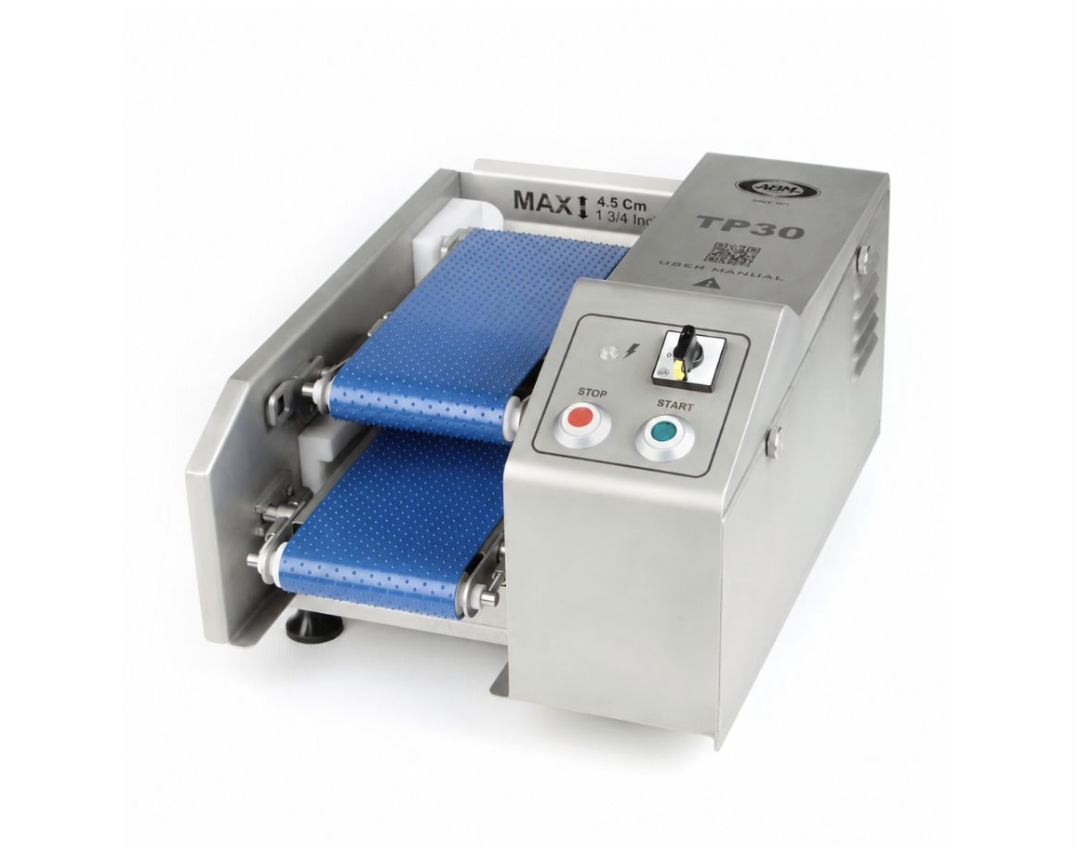
The TP30 removes the guesswork. Every pass produces a uniform fillet, run after run, shift after shift. Consistency stops being something you have to manage and starts being something you can count on.
2. Safety Risk
Manual filleting means hands and blades working in close quarters, repeatedly, for hours. Even experienced staff face real risk, and the cost of an injury goes well beyond the immediate incident. It's lost time, workers' comp claims, and the disruption of retraining a replacement.
The TP30 is built with an easily removable blade kit and a design that keeps staff away from the point of cut. It's a safer way to do the same job, which matters just as much to your team as it does to your bottom line.
3. Speed
Hand-filleting is slow. It's a bottleneck that limits how much product you can move through your operation in a given shift, no matter how skilled your staff is. That bottleneck has a ripple effect. It caps your output, extends your labor hours, and makes it harder to keep up with demand during peak seasons.
The TP30 changes the math. It's built to process chicken breast, along with turkey, pork, and beef, at a pace no hand-filleting team can match, freeing up labor for other tasks and letting your operation move at the speed your business actually needs.
Why the ROI Shows Up So Fast
When you put those three factors together, less waste from inconsistent cuts, fewer safety incidents, and dramatically higher throughput, the math adds up quickly. That's why some of our customers have seen a full return on their TP30 investment in less than two months. It's not a marginal upgrade. It's a machine that pays for itself by solving problems your operation is already absorbing the cost of, whether you're tracking it or not.
Built for the Long Run
The TP30 is constructed entirely of stainless steel, sturdy enough for continuous use but compact enough to fit into operations with limited space. It's easy to disassemble and reassemble without extra tools, which keeps cleaning and sanitizing simple, an important detail for any team trying to keep both throughput and hygiene standards high.
The Bottom Line
Inconsistency, safety, and speed aren't separate problems. They're three symptoms of the same underlying issue: doing a job by hand that was never meant to scale by hand. The TP30 addresses all three at once, and the return on that investment tends to show up faster than most equipment purchases you'll make this year.
If your team is still filleting chicken breast by hand, it's worth finding out what the TP30 could do for your operation. Reach out to your local dealer, or contact us directly if you're not sure who that is. We'll help you find the right fit.
.jpg)

.jpg)
.jpg)

.svg)
.svg)